

[ANALYSIS] Between Battles: How the Iran-Israel/U.S. Conflict Might Accelerate Global Shifts
- SYFCOM

- Jun 28, 2025
- 3 min read
Updated: Jun 30, 2025
KUALA LUMPUR, 28 JUN 2025
Since the Iran–Israel “ceasefire” was announced on Tuesday, 24 June 2025, brokered by the United States and Qatar, the ceasefire has largely held, despite reports of skirmishes and violations on both sides in its opening hours.
Yet, the Strategic Youth Foreign Policy Community of Malaysia (SYFCOM)'s preliminary assessment in this context is that this so-called "ceasefire" is merely a tactical pause and not "sustainable" peace. We believe Iran and, arguably, more significantly, Israel and the U.S.—are using this lull to regroup, rearm, and refine their strategies. Expect re‑escalation within months, be it in similar conflict or in other forms.
Geopolitically, SYFCOM sees the following shifts potentially accelerating:

Deepening Sino‑Russian Energy Ties.
With Iran’s oil exports still under threat, Beijing will highly likely double down on Russian crude and potentially supplies from Central Asia to fill the gap. It is said that over 90% of Iran’s discounted oil went to Chinese “teapots”. In fact, on a wider scale, China is said to be importing a fifth of Iran’s oil, more than any other country. In such contexts, China may now have greater incentive to fast-track Russian gas deals which Moscow has been seeking a deal to build to, such as the Power of Siberia-2 pipeline which is expected to deliver 50 billion cubic metres of gas a year to China.

"Normalization" of Preventive Warfare.
We could potentially see the 'culture' of preventive warfare becoming normalized following the series of strikes in the Iran-Israel/U.S. conflict that target beyond just 'strategic facilities' - including regime symbols and command centers. This trend may inadvertently weaken the post-1945 taboo against cross-border preemption. While this should not be viewed as an outright collapse of the rules-based order, such actions could lower the threshold for other states to justify anticipatory attacks. Flashpoints like the Taiwan Strait, India-Pakistan border, or Cambodia-Thailand disputes - where ambiguous 'intelligence' and perceived existential threats might increasingly override diplomatic caution - could become particularly vulnerable. If left unchallenged, this precedent risks making destabilizing military gambits more politically "palatable" worldwide.

Surge in Jihadist Propaganda and Recruitment.
Extremist groups from West Africa to South Asia might possibly "weaponize" footage of Western bombs striking Iranian soil to rally recruits, solicit funding, and justify local attacks on U.S., Israeli or "Western" allies. Exposure to images of civilian damage and regime defiance feeds the narrative of a “Western crusade,” amplifying asymmetric threats far beyond the Middle East.
Splintering of Non‑Aligned Coalitions.
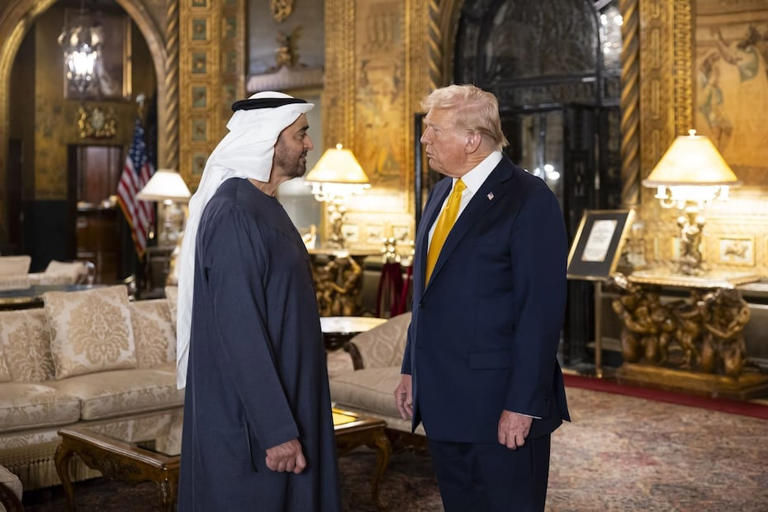
Gulf states such as the UAE and Saudi Arabia may quietly accept deeper security integration with Israel and the U.S., while groups like ASEAN and the African Union may face intensified pressure to "choose". The result will be a fracturing of long‑standing multilateral balances and the gradual realignment of regional blocs.
In a nutshell, this "ceasefire" should be viewed not as a milestone of peace but as the calm before the next storm. Neither side genuinely trusts the other to hold fire, and each is already positioning for the next phase of conflict - militarily, diplomatically, and through narrative warfare with the high risk of spillovers.
SYFCOM hopes that regional and global stakeholders will recognize the fragility of this ceasefire and work to address its underlying drivers - not only to prevent wider conflict, but to protect vulnerable civilian populations already bearing the brunt of this confrontation.
//END

![[OPINION] DEFA & ASEAN’s Digital Economies: A Strong Foundation, But Practicality Is Key](https://static.wixstatic.com/media/1e8ce2_07ace29ef5174f2cb51bff0acfd275be~mv2.webp/v1/fill/w_700,h_466,al_c,q_80,enc_avif,quality_auto/1e8ce2_07ace29ef5174f2cb51bff0acfd275be~mv2.webp)
![[ANALYSIS] Key Takeaways from the U.S. Defense Secretary Pete Hegseth's 2025 Shangri-La Dialogue Speech](https://static.wixstatic.com/media/1e8ce2_cf8fc1ce786c41cf8cd97618fee3028c~mv2.webp/v1/fill/w_980,h_653,al_c,q_85,usm_0.66_1.00_0.01,enc_avif,quality_auto/1e8ce2_cf8fc1ce786c41cf8cd97618fee3028c~mv2.webp)